
Shelby Criminal Court Records
A Shelby County criminal court record is the official case record kept once a criminal matter is filed with the court. The file can begin with a citation, complaint, indictment, information, or other charging document, then grow through arraignment, bond orders, motions, hearing entries, plea agreements, verdicts, disposition orders, sentencing orders, costs, restitution, and probation terms. The Shelby County Circuit Court Clerk is the local record custodian for Circuit, Family, and District Court records.
Criminal jurisdiction is split by court level. Circuit Court handles felonies and capital offenses. District Court handles misdemeanors, violations, arraignments, felony probable-cause hearings, and preliminary hearings. Shelby County schedules also show in-custody arraignments, misdemeanor and felony arraignments, misdemeanor and felony motion docket, and preliminary hearings. A felony may have early District Court events before later Circuit Court activity. That flow is why a full criminal court record may require checking more than one docket stage.
The assigned image from the Shelby County Commonwealth's Attorney page ties criminal court records to the felony prosecution office for the 53rd Judicial Circuit.
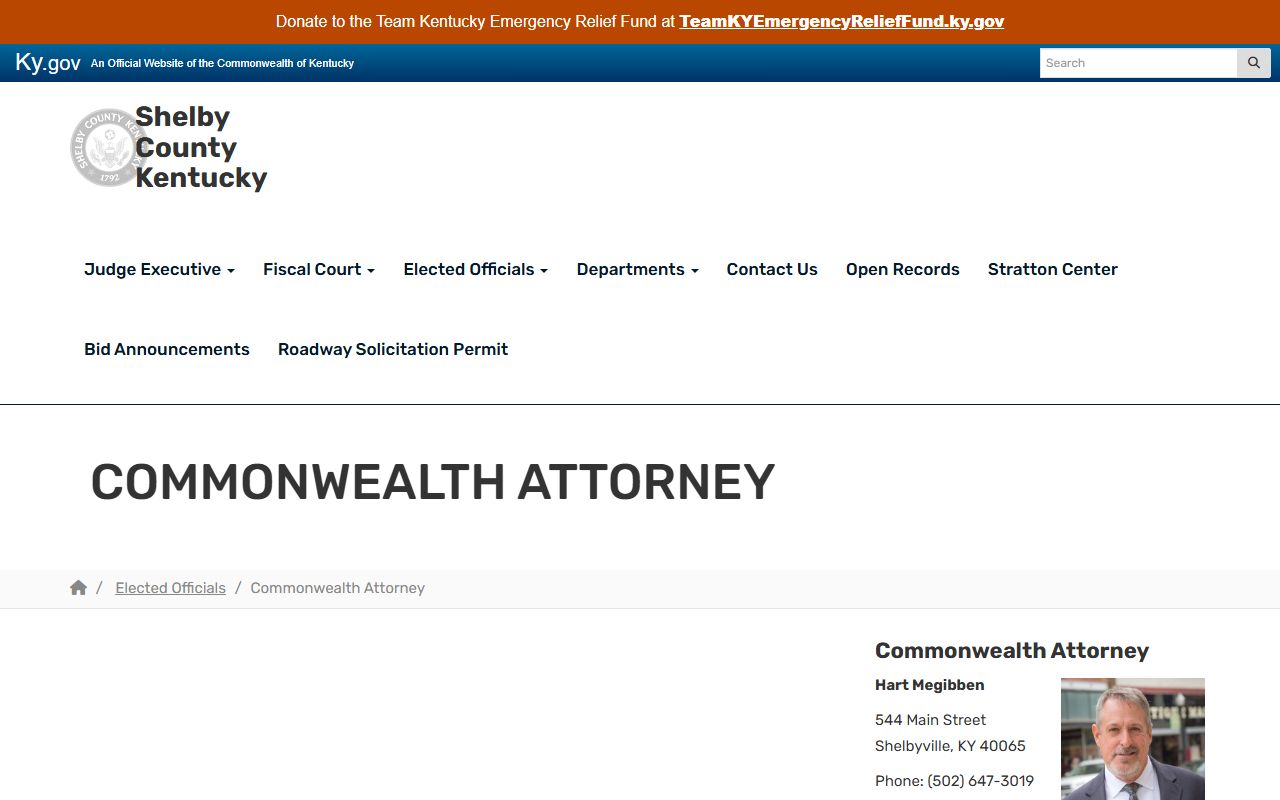
That office context is important because Circuit felony records reflect court filings and prosecution activity, not just police or jail records.
Search Shelby Criminal Court Records
Use KYeCourts guest access for public case information and the KCOJ docket search for court dates. The visible KYeCourts entry screen requires public guest validation before deeper case search fields appear. The docket portal lets users select Shelby County, choose Circuit or District, pick a date, and submit the calendar search.
- Start with KYeCourts for public case information if the goal is the criminal case file, not just a hearing date.
- Use the KCOJ docket search when the goal is arraignment, motion docket, preliminary hearing, or another scheduled event.
- Choose Circuit for felony-level case activity and District for misdemeanors, violations, arraignments, and preliminary hearings.
- Compare the docket entry with the case record before treating a charge, plea, or disposition as final.
- Request certified copies, older records, or official file review from the Shelby County Circuit Court Clerk.
The Kentucky AOC background-check page is a separate official route for statewide criminal record reports. It should not be treated as the same thing as browsing a Shelby County criminal case file. A background report may summarize qualifying criminal-history information, while the court file shows case events, filed documents, and disposition details for the Shelby case.
Criminal Case Flow
A Shelby County criminal case record changes as the case moves through the courts. Early records may show a citation, complaint, arrest-related filing, bond, or first appearance. Later records may show amended charges, suppression motions, plea talks, trial settings, verdicts, dismissed counts, sentencing, and payment or probation entries.
Case flow: Charges Filed › Arraignment › Pretrial / Motions › Plea or Trial › Disposition › Sentencing
| Stage | What Happens |
|---|---|
| Charges filed | A citation, complaint, indictment, information, or related filing opens or moves the criminal matter. |
| Arraignment | The charge is presented in court, and plea, counsel, bond, or custody issues may be addressed. |
| Pretrial / motions | Parties file motions, seek discovery, request hearings, or address suppression, bond, and scheduling. |
| Plea or trial | The defendant may enter a plea, or the case may proceed toward bench or jury trial. |
| Disposition | The court records the outcome of each charge, such as guilty, dismissed, amended, or acquitted. |
| Sentencing | The court enters jail, prison, probation, fine, cost, restitution, treatment, or other sentence terms. |
In Shelby County, the published schedule places in-custody arraignments on Tuesday at 1:00 p.m., misdemeanor and felony arraignments on Tuesday at 2:00 p.m., the misdemeanor and felony motion docket on Thursday at 8:30 a.m., in-custody arraignments and preliminary hearings on Thursday at 1:00 p.m., and preliminary hearings on Thursday at 2:00 p.m. Schedules can change, so verify with the clerk before appearing.
Shelby Criminal Record Fields
The public view depends on whether the user is seeing KYeCourts, a docket screen, an official file at the clerk counter, or an AOC background-check product. The full Shelby County criminal court record can include fields tied to the defendant, charge, court, event history, outcome, and sentence. Some sensitive data may be masked or restricted.
| Field | What It Shows |
|---|---|
| Case number | The identifier used to track and request the criminal case file. |
| Defendant | The person charged in the criminal case. |
| Court / division | Whether the case is in District Court, Circuit Court, or a related division. |
| Charge / statute | The alleged offense, count, citation, statute, or charge description. |
| Attorney of record | Defense counsel, prosecutor, or other attorney listed in the file. |
| Judge | The judicial officer assigned to the case or event. |
| Bond information | Release conditions, bond status, or cash bond notes where public. |
| Docket entries | Hearings, filings, continuances, orders, motions, and payment events. |
| Plea | The defendant's response to a charge, such as guilty or not guilty. |
| Disposition | The result for each charge or count. |
| Sentence | Jail, prison, probation, fines, costs, restitution, or other ordered terms. |
| Appeal or cross-reference | Later review, District to Circuit appeal, or linked case information. |
Prosecution and Defense Roles
Kentucky uses Commonwealth's Attorney offices for felony and Circuit-level prosecution and County Attorney offices for many District Court matters. Shelby County is in the 53rd Judicial Circuit with Anderson and Spencer counties for Commonwealth's Attorney purposes. The local Commonwealth's Attorney is listed at 544 Main Street, Shelbyville, KY 40065, with phone 502-647-3019.
The Shelby County Attorney prosecutes state cases in Shelby District Court, including criminal, traffic, and juvenile cases. The County Attorney also handles dependency, neglect, and abuse matters in Family Court and prepares mental inquest petitions, warrants, guardianship petitions, and disability petitions in District Court. Those duties explain why some District Court criminal or quasi-criminal records are public, while juvenile, mental-health, and family-related records may be restricted.
The Kentucky Department of Public Advocacy serves as the public defender agency. The Shelbyville Trial Office serves Shelby, Spencer, and Anderson counties from 487 Frankfort Rd., Suite 1, Shelbyville, KY 40065, with phone 833-514-8984. Defense counsel information may appear in the court file when a defendant is represented.
Charges vs Convictions
A criminal court record can show charges that never become convictions. Charges may be amended, reduced, dismissed, or resolved by plea. A conviction is the final guilty result for a charge, whether by plea, bench finding, or jury verdict. Reading a Shelby County criminal court record requires checking disposition and sentence fields, not only the original charge list.
| Point | Charge | Conviction |
|---|---|---|
| Meaning | An accusation filed with or presented to the court. | A guilty outcome by plea or finding. |
| Record stage | Appears near the beginning or through amendment. | Appears after disposition and before or with sentencing. |
| Possible result | Can be dismissed, amended, reduced, or tried. | Can lead to sentence, probation, fines, costs, or restitution. |
| Public reading risk | May be misunderstood if the disposition is ignored. | Still must be read with sentence, appeal, and expungement status. |
For a closer look at the charging document and court charges after arrest, use the Shelby County arrest records and charges page. This criminal court records page stays focused on the full case file and outcome.
Dispositions and Sentences
Disposition is the outcome of a charge or case. Common plain-English meanings include dismissed, guilty, not guilty, amended, resolved by plea, or otherwise closed. A sentence is the punishment or court-ordered term after conviction. In Shelby County criminal records, sentencing entries may show jail or prison commitment, probation, costs, fines, restitution, treatment terms, credit for time served, or payment status when public.
Bond details can also matter. KCOJ's Shelby County page says court bonds can only be paid in cash. A bond order is not a conviction and does not prove guilt. It records release or appearance terms while the case is pending. Always read bond, disposition, and sentence as separate parts of the criminal case file.
Sealed vs Expunged Records
Restricted criminal records require careful wording. A sealed record is hidden from ordinary public access by law or court order. An expunged record follows a statutory process that can remove or delete eligible records from public view and agency custody, subject to Kentucky limits. KCOJ explains that Kentucky requires an expungement certification for many adult expungement filings.
| Point | Sealed | Expunged |
|---|---|---|
| Public visibility | Hidden from ordinary public access. | Removed from public view when the court grants relief. |
| How it happens | By law, court order, or confidential case type. | By statutory expungement process and court order. |
| Kentucky examples | Juvenile, adoption, mental-health, or other confidential material. | Dismissal, acquittal, no indictment, eligible misdemeanor, violation, or eligible felony routes. |
| Where to start | Ask the Circuit Court Clerk whether access is allowed. | Start with KCOJ expungement certification and file in the court that handled the case. |
The assigned image from the Kentucky Court of Justice expungement page is used here because expungement can change public access to Shelby County criminal court records.
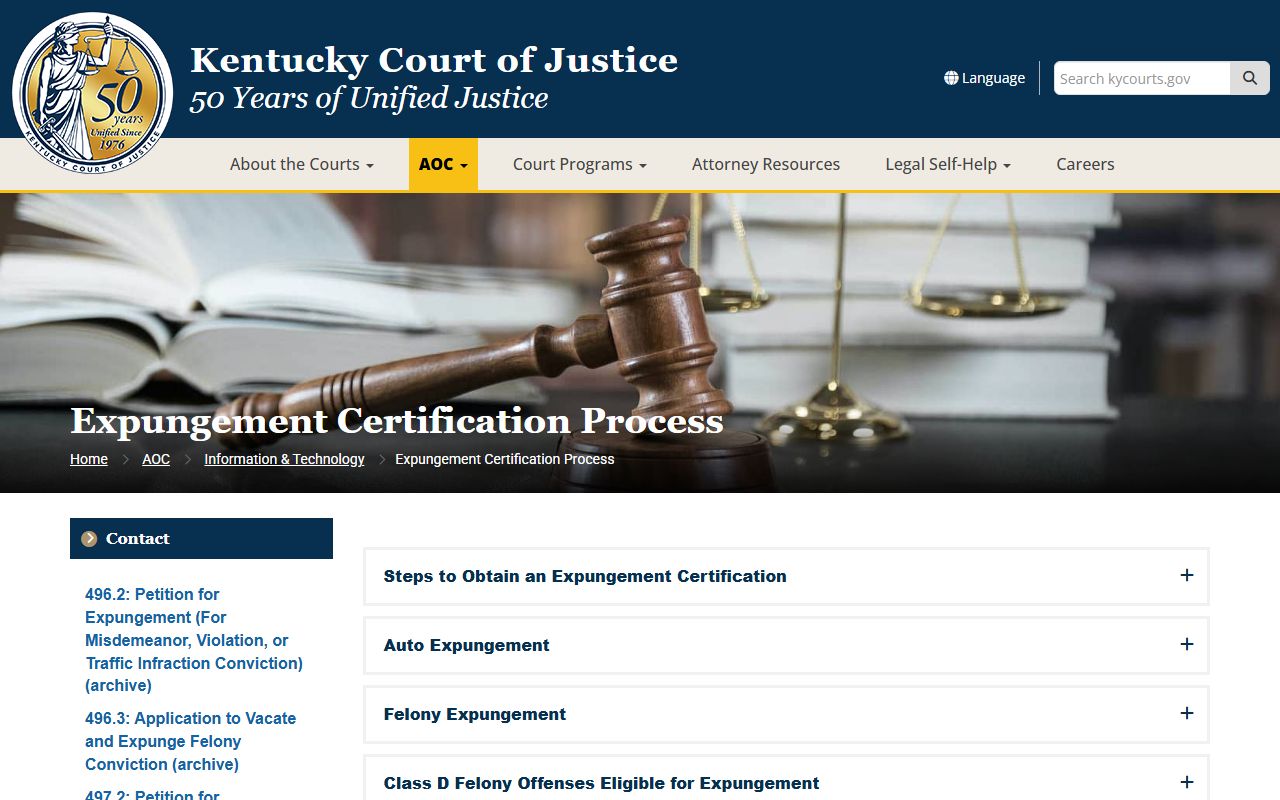
Expungement research should focus on eligibility, certification, and the court that handled the Shelby County case rather than assumptions from an online search result.
Public Access and Limits
Shelby County criminal court records are accessed through KYeCourts, docket search, and the Circuit Court Clerk, but not every criminal or related record is public. KRS 610.340 makes juvenile court records confidential unless disclosure is authorized. Kentucky expungement routes include dismissal, acquittal, or no indictment under KRS 431.076, and KCOJ describes eligible Class D felony conviction relief through KRS 431.073.
The broader Kentucky Open Records Act helps county-government access, but court case files follow the court-record route through the clerk. Adult criminal case information may be public, while sealed cases, expunged records, juvenile matters, confidential mental-health proceedings, protected identifiers, and some active or sensitive filings may be unavailable or redacted.
Note: A missing public search result can mean no match, wrong court, archive transfer, sealing, expungement, or a restricted case type.
Specialty Court Context
Kentucky specialty courts can affect criminal case progress without replacing the court record. KCOJ lists Drug Court, Mental Health Court, and Veterans Treatment Court under the Department of Specialty Courts. KCOJ says Drug Court serves all 120 counties and uses treatment, testing, case management, and court supervision for participants with Substance Use Disorder.
The assigned image from the Kentucky Specialty Courts overview supports that broader court-program context.
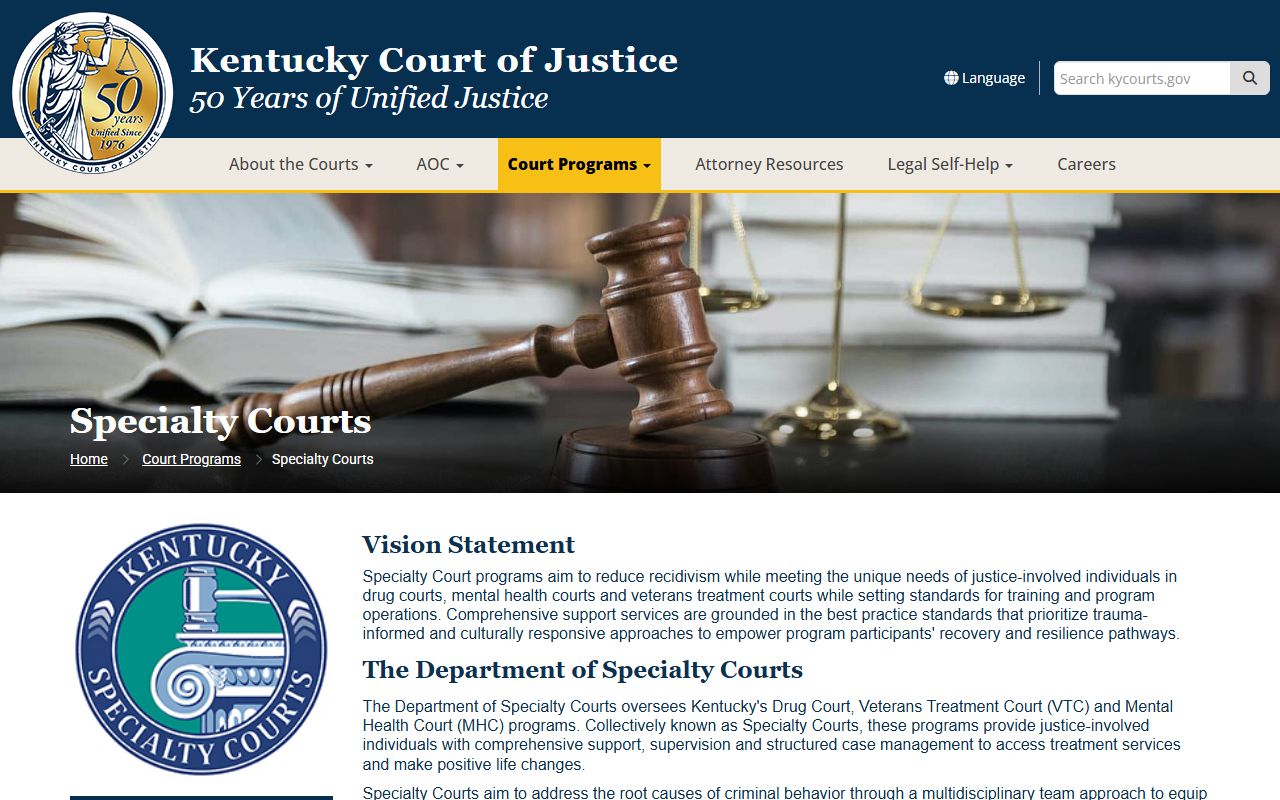
Specialty court participation may be reflected in orders or docket entries, but public access still depends on the case type and the official file.
The assigned image from the Kentucky Drug Court page is included because Drug Court is the specific statewide specialty program confirmed to serve all Kentucky counties.
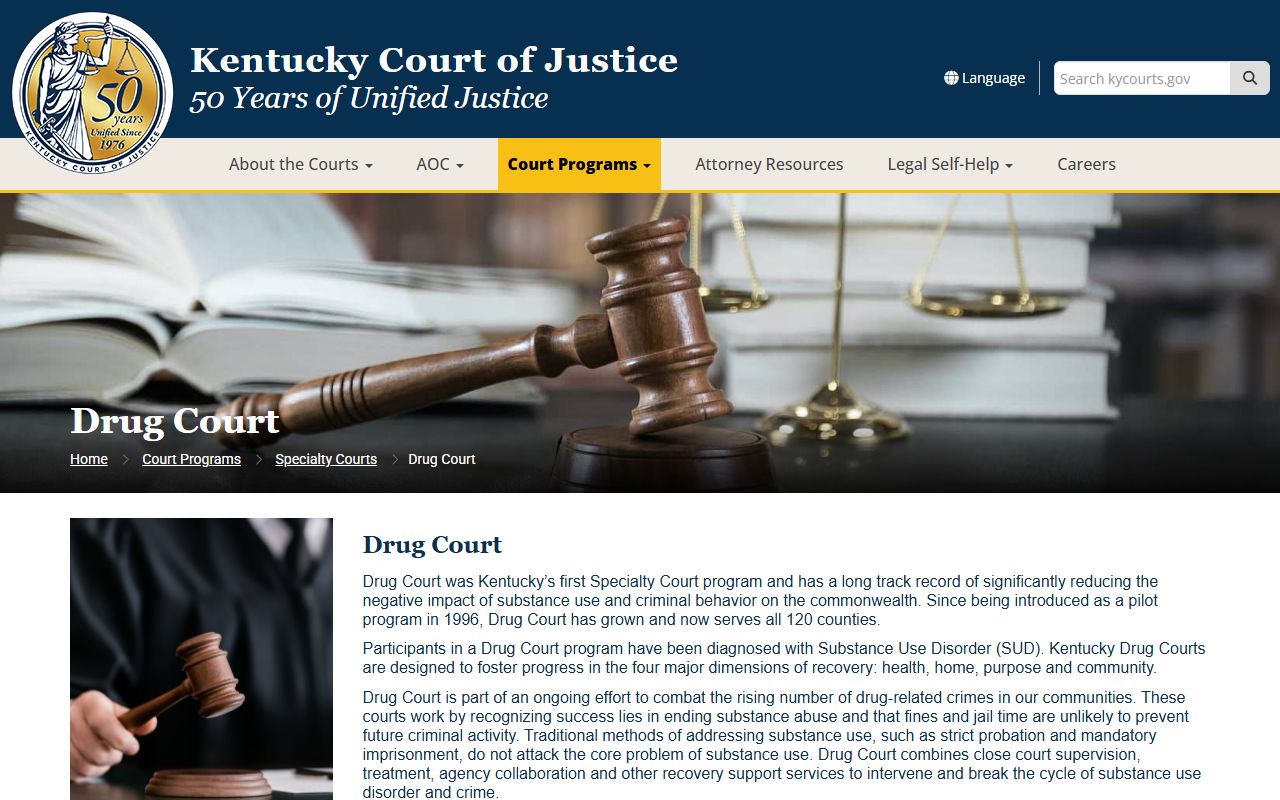
Shelby-specific specialty court docket times, local coordinators, and graduation data were not located in the official sources reviewed, so the safer record point is to verify any program-related order with the clerk.
Certified Criminal Case Copies
Use online tools to identify the case, then request official copies from the Shelby County Circuit Court Clerk when a record must be used for court, licensing, correction of another file, or personal documentation. The clerk office is at 401 Main St., Suite 101, Shelbyville, KY 40065. Circuit criminal matters use 502-633-1287. District criminal and preliminary matters use 502-633-4736. Ask whether the case is in Circuit or District Court, whether the file is archived, and whether the copy needs certification.
If the criminal case is old enough to be held by the State Records Center, KCOJ says the clerk must provide the locator information before the state can process the request. For all court records, the Shelby County court records access path explains the broader copy and archive process.